Livelihoods and markets
Agriculture, jhum, wage work, trade, tourism, public employment, remittances, and care work interact differently across places.
Economy · services · access
A school, clinic, market, water point, or project can exist without being reachable, affordable, safe, staffed, linguistically accessible, or trusted. Wellbeing evidence must connect facilities to real journeys and outcomes.
Research cutoff: 4 September 2026. Definitions and verification status travel with each claim.
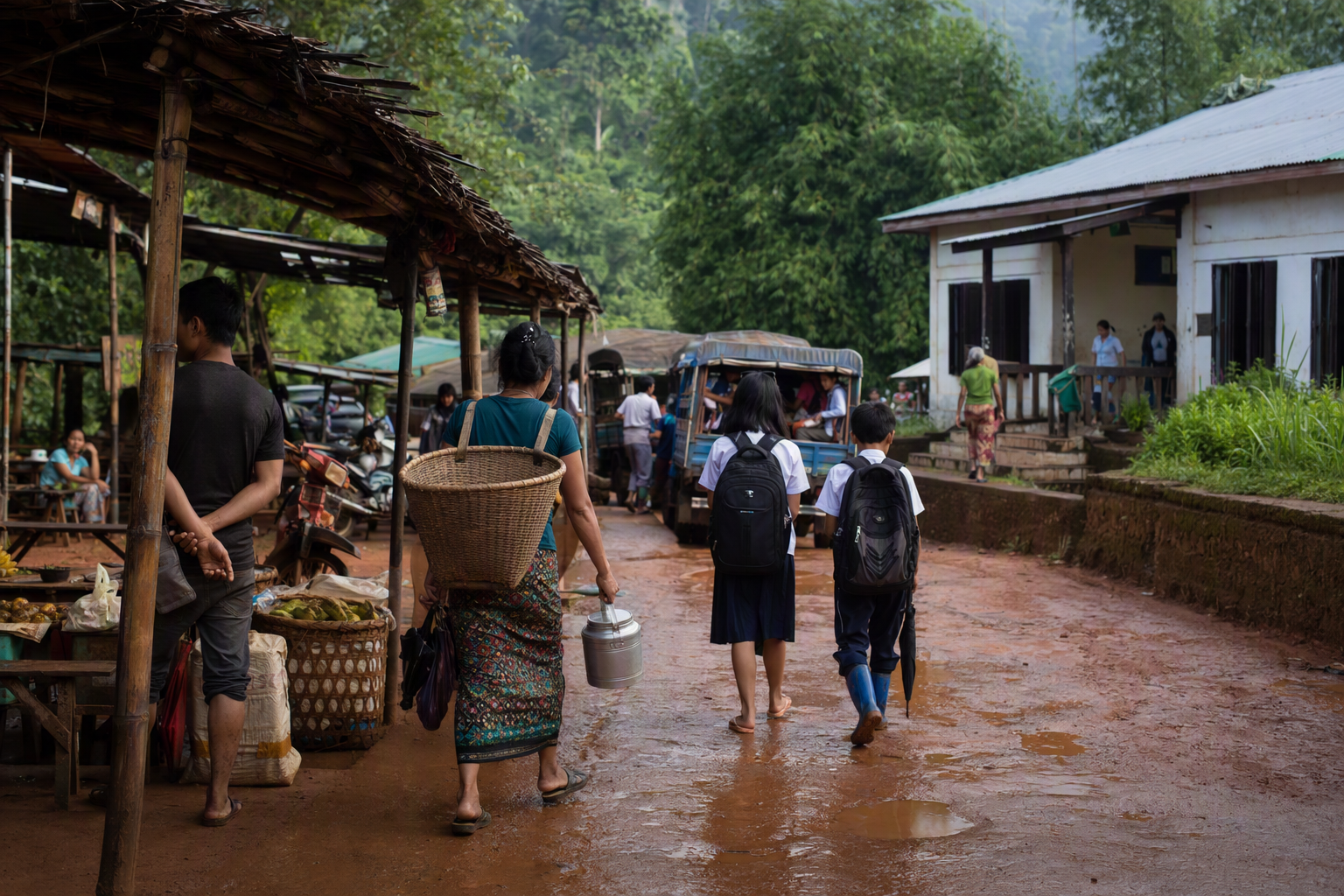 Editorial image · generated, not documentary evidence
A fuller access model
Agriculture, jhum, wage work, trade, tourism, public employment, remittances, and care work interact differently across places.
Enrolment does not establish attendance, learning, retention, language inclusion, or the safety and cost of travel.
Facility totals should be paired with staff, medicine, referral, water reliability, travel time, affordability, and outcome evidence.
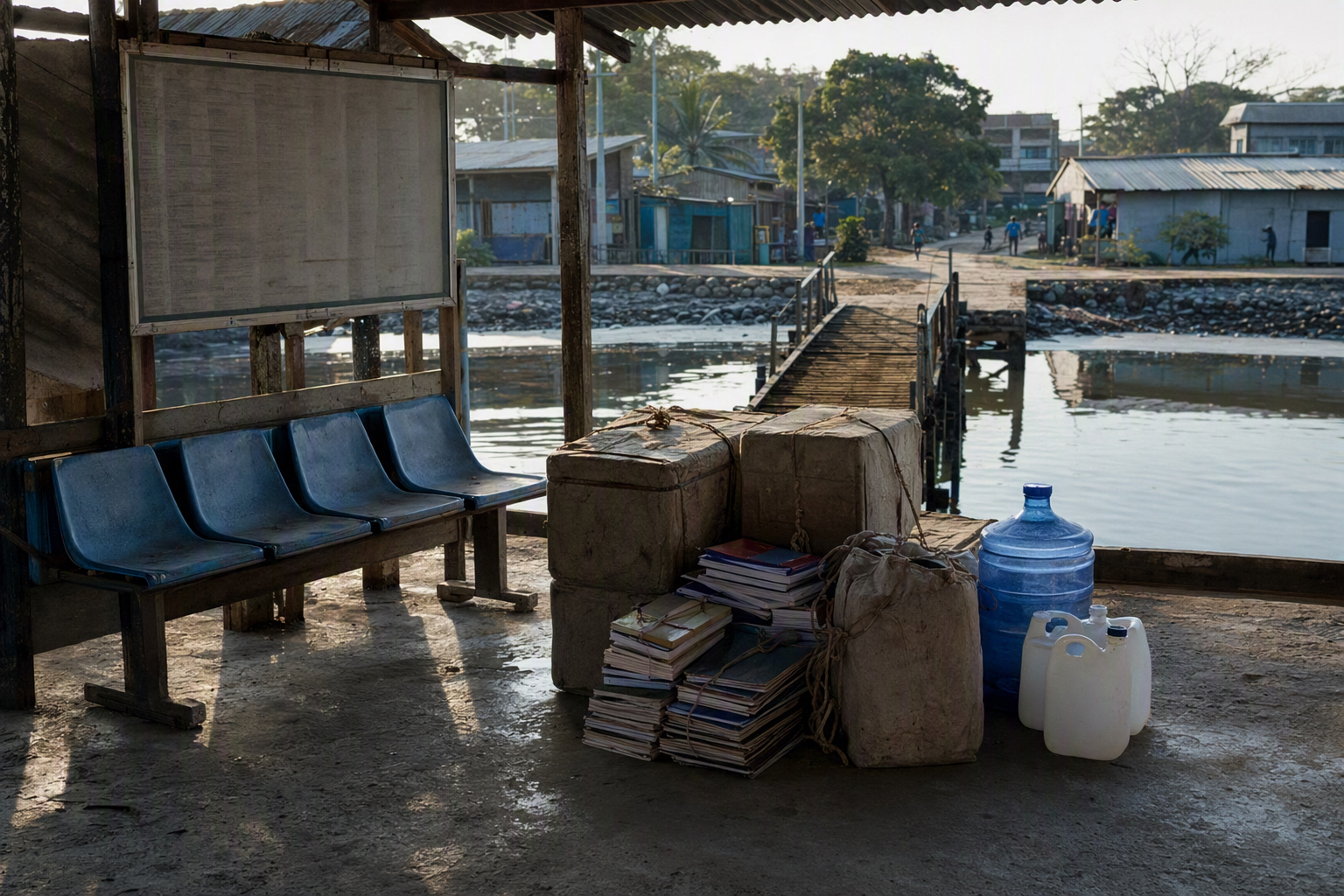 Editorial image · generated, not documentary evidence
Topic pathways
Each route separates assets and programmes from staffing, access, quality, use and outcome.
Agriculture, jhum, markets, labour, tourism, migration and unpaid care need place-aware evidence.
Inspect estimate, allocation, release, expenditure, output, maintenance and outcome separately.
Keep modelled poverty estimates, acute food-security classification and programme coverage distinct.
Move beyond enrolment to travel, attendance, teachers, language, retention and learning.
Trace staffing, medicines, referral, transport, affordability, water reliability and outcomes.
Public investment
Budgets and completion notices are starting points, not final proof of public benefit.