Before 1947
Routes, authority and colonial regulation
Read precolonial connections, the 1860 district, circles and mauzas, forest reservation, Regulation I of 1900 and Partition with source-specific terminology.
Open chapterHistory · boundary · memory
Read the region through connected periods: earlier routes and authority, colonial regulation, partition and state change, the Kaptai project, conflict and displacement, the 1997 Accord, and unfinished questions of implementation and memory.
Research cutoff: 4 September 2026. Definitions and verification status travel with each claim.
 Editorial image · generated, not documentary evidence
Historical pathway
Dates orient the reader, but displacement, law, land, institutions and memory cross period boundaries.
Before 1947
Read precolonial connections, the 1860 district, circles and mauzas, forest reservation, Regulation I of 1900 and Partition with source-specific terminology.
Open chapter1947–1971
Distinguish dam construction, reservoir filling, compensation, displacement, migration and plural records of 1971.
Open chapterConflict and peace
Keep structural causes, disputed dates, civilian harm, returns, negotiations and post-Accord questions attributable.
Open chapterInspect the record
Browse turning points with evidence and uncertainty notes.
Find source families, definitions, and gaps.
See claims that need current or independent confirmation.
Exact day means a dated instrument; month/year means the day is disputed or unavailable; a range marks a process with multiple milestones. The timeline filters by era, theme, place and evidence status, with synchronized list, count, reset and empty state.
Key anchors include the 1860 district, Regulation I of 1900, Kaptai milestones from 1957–64, the disputed August 1992 ceasefire date, and the 2 December 1997 Accord. [MS0041][MS0050][MS0268]
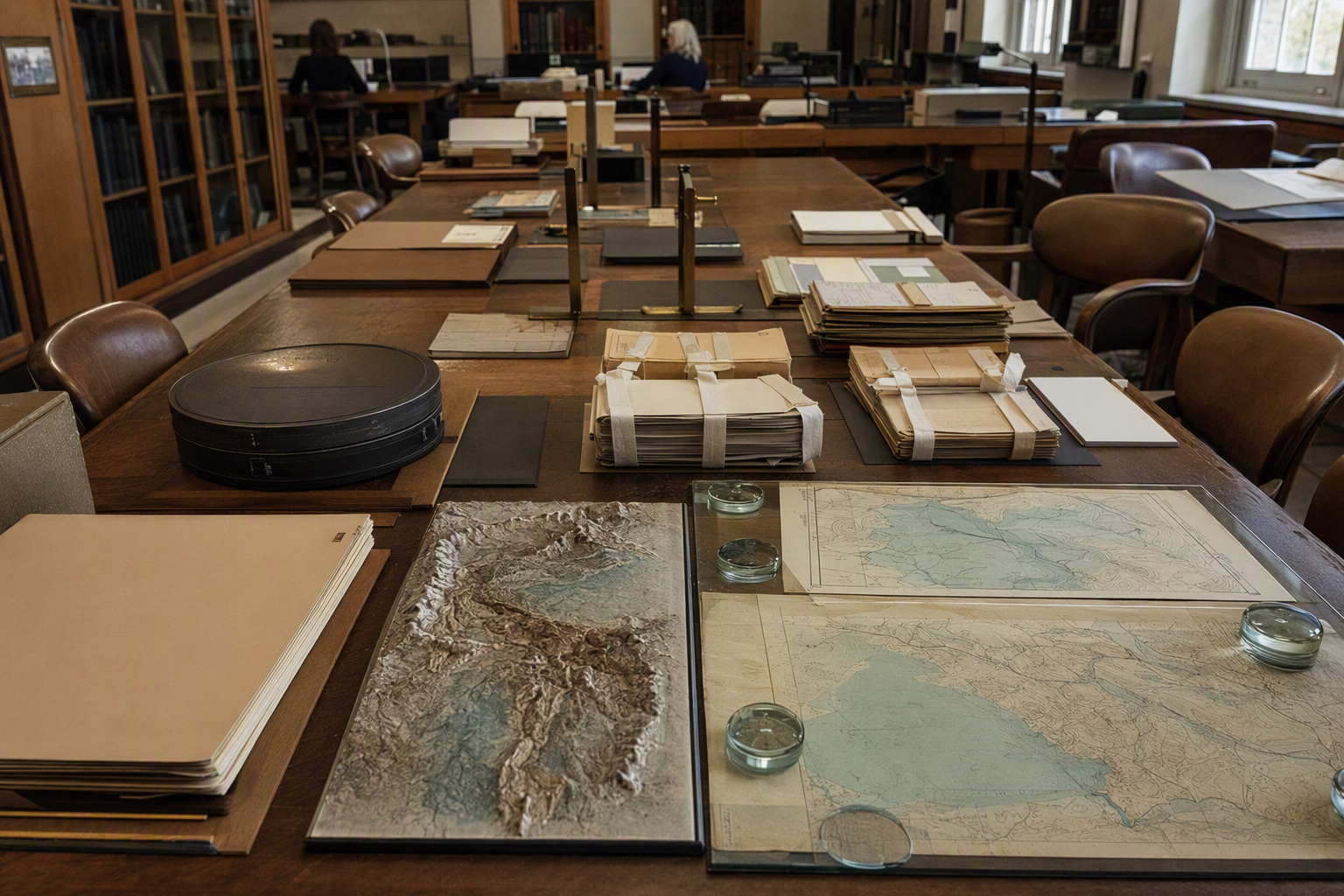 Editorial image · generated, not documentary evidence
How to read difficult history
Historical synthesis is strongest when it does not make unlike records pretend to agree.