Jhum and mixed cultivation
Jhum may be livelihood, land use, and tenure evidence at once. An eight-village 2014 study explains mechanisms, but its purposive sample cannot establish regional prevalence.
Work, markets, seasons, and measurement
Livelihoods combine agriculture, jhum, wage work, trade, public employment, tourism, care, and migration in patterns that vary by place and season. Income measures do not capture every cost or contribution.
Research cutoff: 4 September 2026. Generated visuals are editorial context, not evidence.
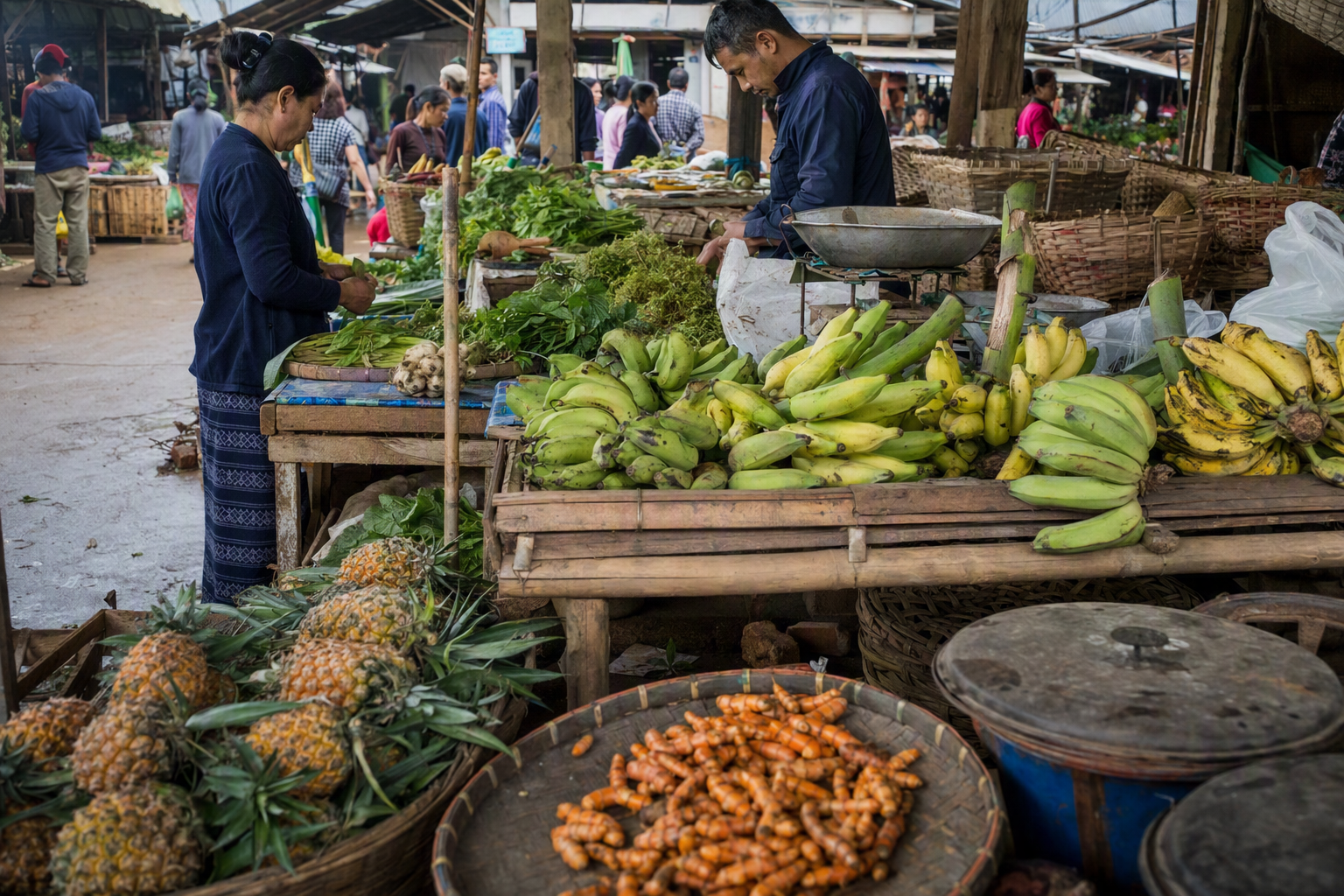 Editorial image · generated, not documentary evidence
explanation
Livelihood categories overlap across seasons, and important disaggregation is still missing.
Jhum may be livelihood, land use, and tenure evidence at once. An eight-village 2014 study explains mechanisms, but its purposive sample cannot establish regional prevalence.
Fruit, vegetables, spices, livestock, storage, road condition, transport time, and seasonal prices form one chain. A road or market shed is an input, not proof of higher net income.
Official Kaptai production is a useful output series. It does not establish species health, fisher earnings, access rights, or distribution.
Employment, collection, plantation, customary use, and extraction overlap with land law and ecology. Production values cannot substitute for tenure or sustainability evidence.
Public employment, construction, retail, transport, services, and small enterprises matter, but no current CHT-wide labour, wage, SME, or remittance series was located.
A 2017 destination plan used estimated visitor spending and target local-retention shares. These are planning assumptions, not observed income outcomes.
The main structural datasets refer to the 2019 Agriculture Census and embedded 2013 Economic Census context. Current income, wage, border-trade, tourism, extraction, and beneficiary-distribution evidence remains incomplete.
Sources: MS0222–MS0224, MS0228, MS0229, and MS0275.
 Editorial image · generated, not documentary evidence
Output, value, income, employment, migration, and environmental effects answer different questions.
Read the wording together with its date, geography, definition, source type, review state, and any unresolved disagreement. A concise interface should not compress those conditions into a single confidence score.