Different histories of residence and movement
Bengali residents
Bengali residents of the CHT have varied family, work, displacement, and migration histories. The page separates cohorts and evidence without collective blame or assumptions about any individual.
Research cutoff: 4 September 2026. Generated visuals are editorial context, not evidence.
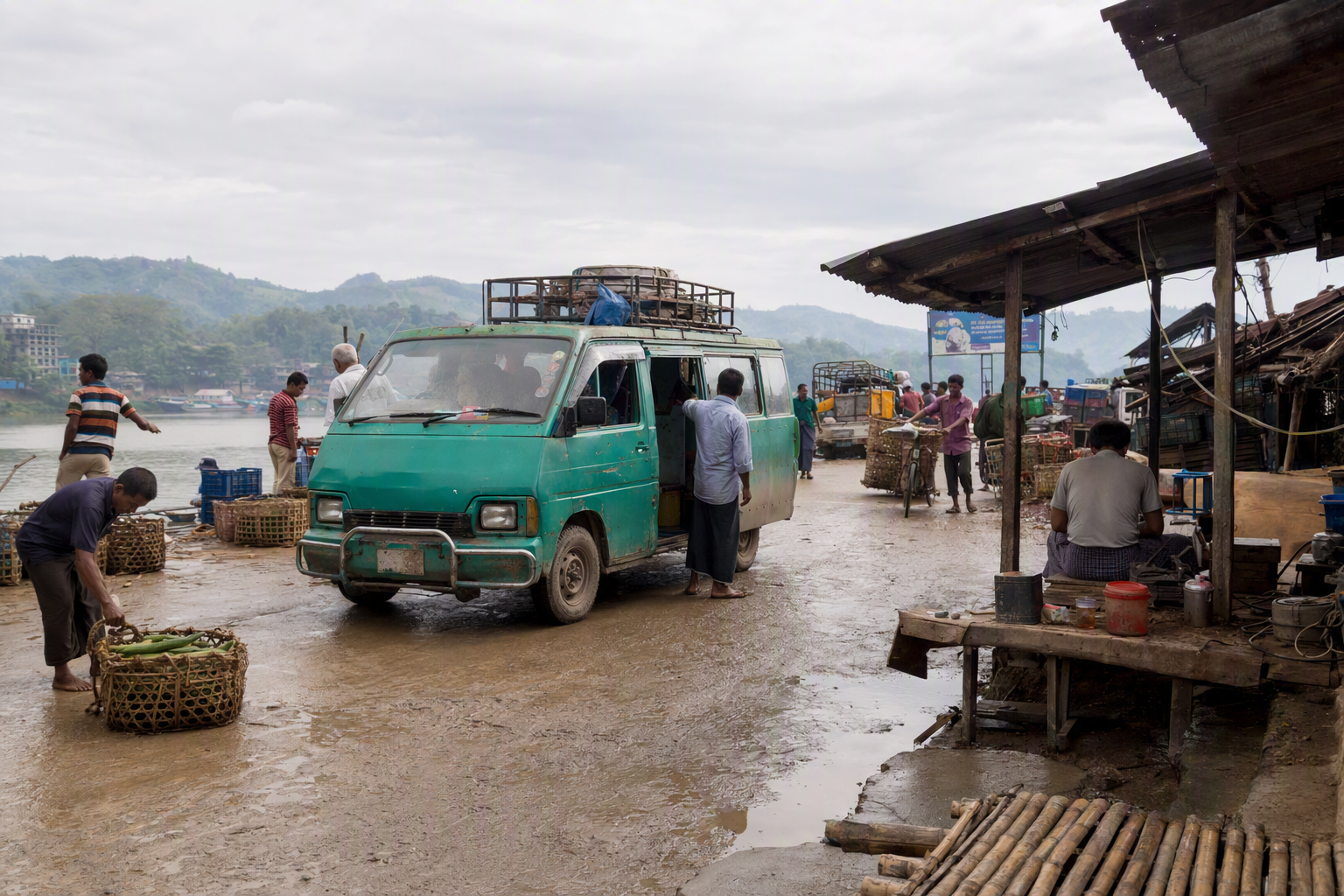 Editorial image · generated, not documentary evidence
history
Different residence and migration histories
Separate pre-Partition residents, Kaptai-era workers, programme settlers, later migrants, displaced civilians, and descendants.
- Before Partition
Long-established residents
Bengali-speaking families connected to towns, trade, administration, transport, and neighbouring plains have more than one local history. Residence does not by itself establish a parcel claim.
- Kaptai era
Workers, traders, and public employees
Infrastructure and reservoir development brought workers, officials, commercial activity, and family movement. Arrival context and present legal status are separate questions.
- 1979–1984
State-assisted settlement programme
The documented programme is a distinct policy cohort. Participation, later displacement, poverty, inheritance, and competing land claims must not be collapsed into one moral or legal label.
- Later and present
Livelihood migrants, displaced civilians, descendants, and urban residents
Later mobility includes work, education, marriage, conflict-displacement, and locally born histories. Ethnicity cannot reveal when a person arrived, how they vote, or whether they hold lawful tenure.
How to use the cohort model
It supports better questions, not automatic classification of individuals. Land, compensation, residence, and political claims still require person- and parcel-specific evidence, privacy protection, and a right of reply.
Sources: MS0017, MS0021, and MS0038.
 Editorial image · generated, not documentary evidence
Land questions without collective attribution
Land debates, common misconceptions, and prohibited inferences require different kinds of evidence.
Read the wording together with its date, geography, definition, source type, review state, and any unresolved disagreement. A concise interface should not compress those conditions into a single confidence score.
Cohorts, not one category
Distinguish pre-Partition residents; Kaptai-era workers and traders; families moved under the mainly 1979–84 state-assisted programme; later livelihood, professional or family migrants; conflict-displaced civilians; and locally born descendants. [MS0104][MS0109]
A reproduced letter dates programme operations from December 1979 but needs archival authentication. The signed Accord contains no express wholesale-removal requirement. Poverty, allotment or ancestry does not decide every parcel claim. [MS0181][MS0268]